

Craft of Meaning - Design led studio, surface patterns, photography, bespoke art, storytelling
Winter Peonies: Beauty in the Harshest Season
Any flight over ten hours is no small feast for the body — especially when your bedtime suddenly becomes your morning, thanks to the time difference between London and Tokyo. But if you’re lucky enough to arrive between January and late February, there’s no better jet lag remedy than a visit to the Winter Peony display at Ueno Park.
As we disembarked the plane, walking the already familiar airport path toward passport control, we felt at home already — our home away from home.
With our luggage left behind at the hotel, we made our way to Ueno Park. It was a sunny but crisp day. The wind was icy cold — reminding us that it was still winter, still February — even as the nature around us hinted at spring’s imminent arrival.
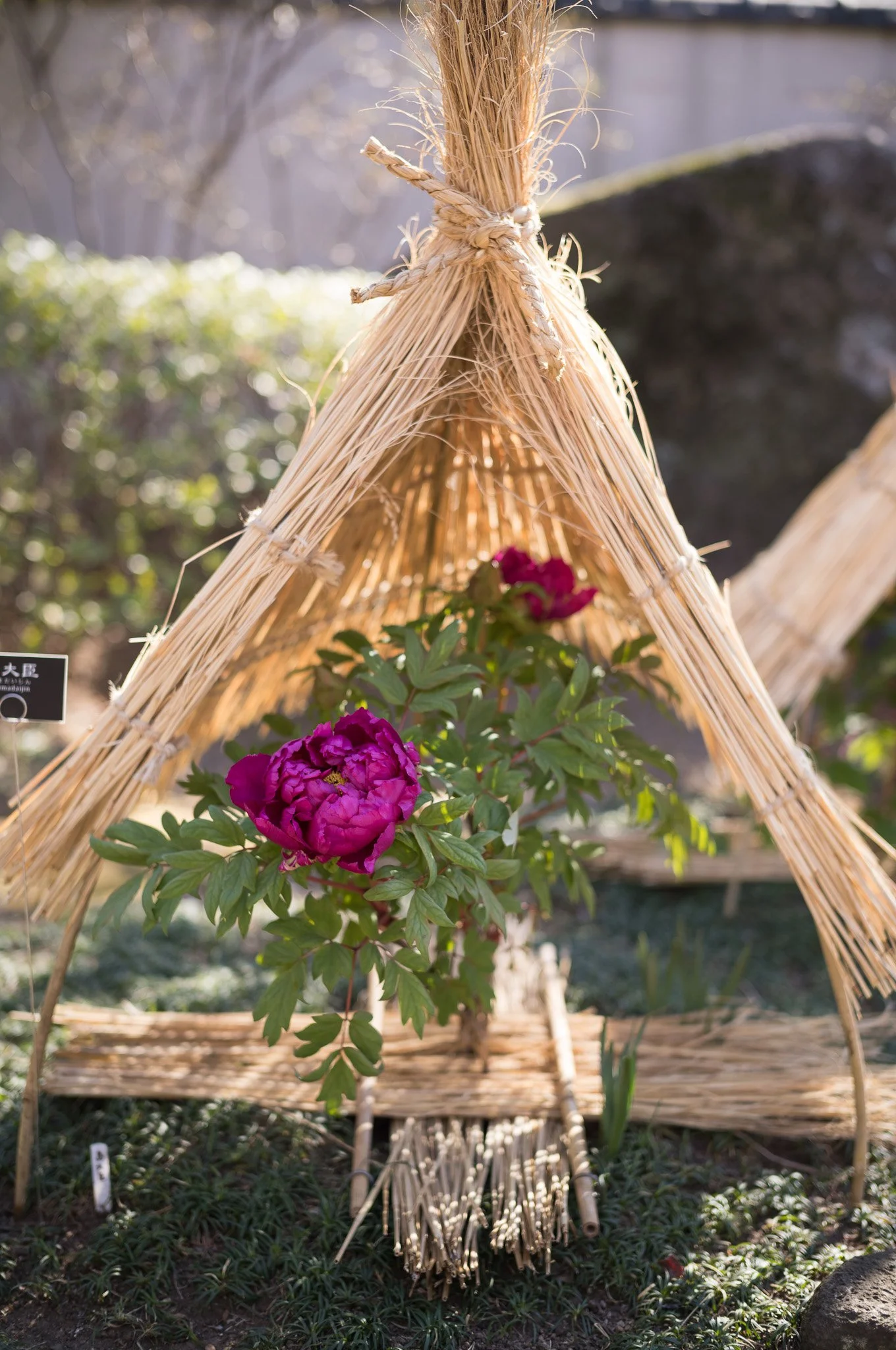
The “Winter Peony Festival” takes place each year from January to late February in the Ueno Toshogu Peony Garden, tucked into the corner of the shrine grounds. It doesn’t occupy a particularly large space, but thanks to its winding, circuit-style layout, it packs so much beauty it might as well be a full-scale botanical garden.
The festival is uniquely Japanese — and as far as I know, it has no real equivalent elsewhere in the world. Winter peonies bloom only under careful cultivation, with a very low flowering rate, which makes each blossom feel incredibly precious.
Visiting the garden was something I’d been looking forward to. I love peonies. When they appear in shops in late spring here in the UK, I always bring some home. For me, they’ve always been associated with spring–early summer — so having the chance to glimpse these beauties out of season was non-negotiable.
It was still early morning, and we had purposely travelled to Japan in the low season to avoid the crowds. There were a few local visitors admiring the flowers, along with ikebana-style installations placed strategically throughout the garden.
In the cold, wrapped up in coats, scarves, and Heattech, seeing those gorgeous plants was a true balm for the soul.
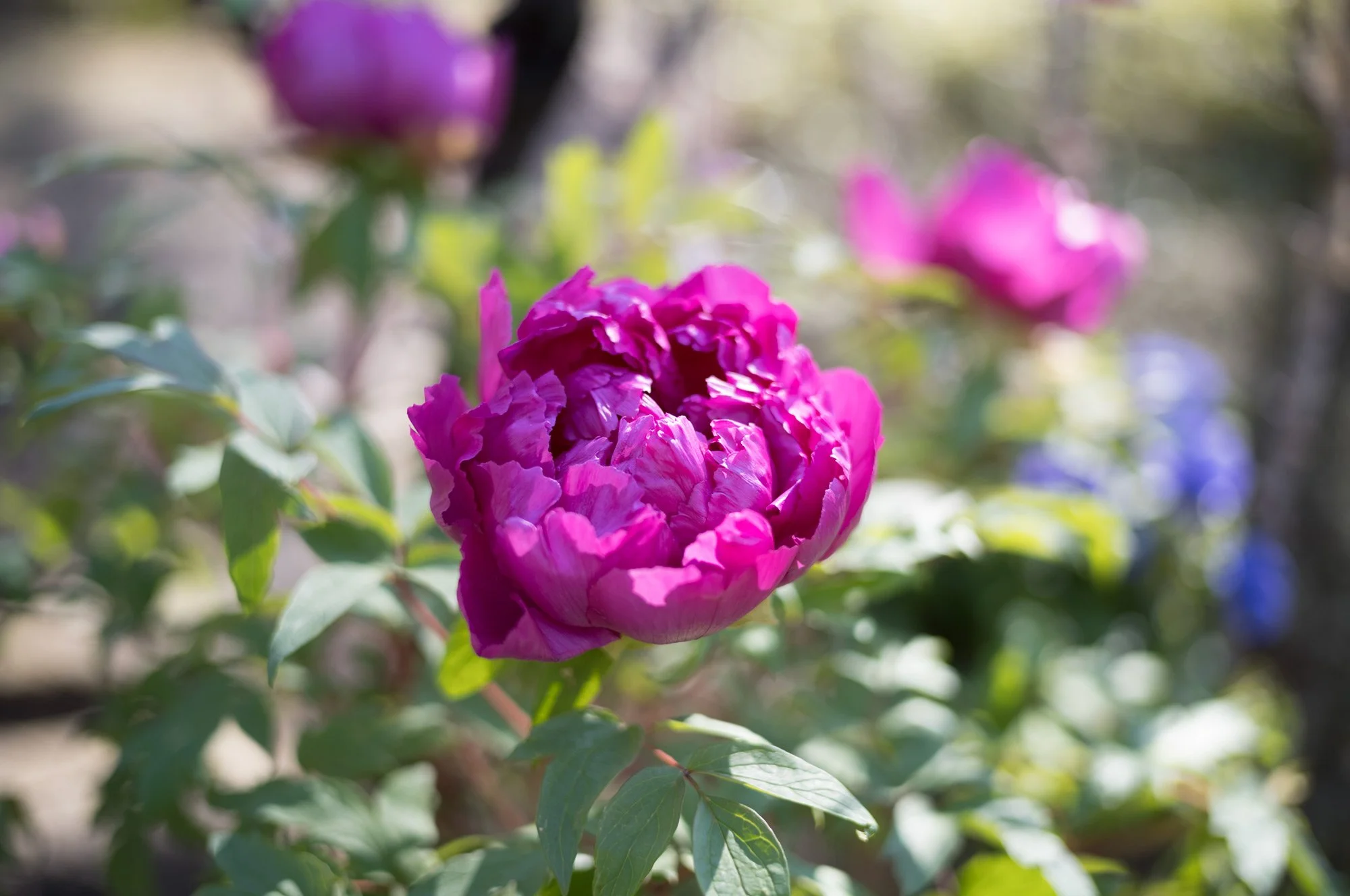
I had never seen so many varieties of peonies in my life. The blooms came in striking reds — from bright crimson to deep burgundy — along with pure whites, soft blush pinks, pale yellows, and even gentle beige. Their shapes were equally diverse: full-headed varieties with countless petals, simpler ones with just a few layers and golden centers, petals that curved or formed clean angles.
And it wasn’t just the blooms. The foliage varied too — from round and full to long and delicate, with leaves that joined or stood apart. I took so many reference photos that day, it’s no exaggeration to say I now have a lifetime’s worth of inspiration from just that one visit.
Each plant sat under a straw hut, called a “warabotchi,” protecting the delicate blossoms from the elements and the harshness of winter. Its raw, geometric shape and pale colour created a striking balance between structure and softness.
There were also seasonal installations featuring pine and beautifully hand-painted fans depicting winter scenes.
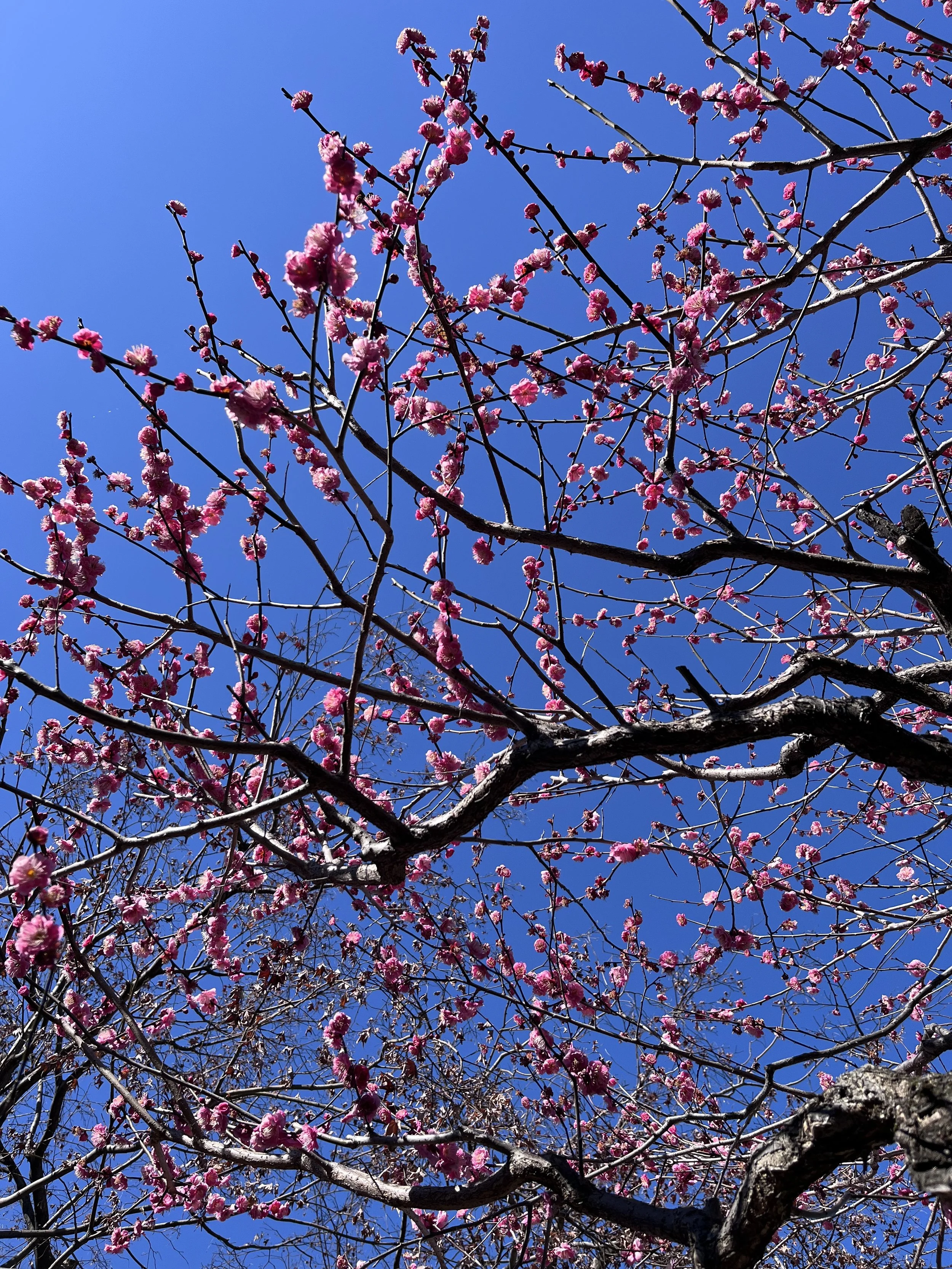
As if that weren’t enough, plum trees were beginning to blossom at the edges of the garden. Wintersweet, with its sunshine-coloured tiny flowers, offered a joyful pop of yellow.
Seeing daffodils was another pleasant surprise! Known in Japan as “suisen” or setchūka (meaning “flowers in the snow”), Japanese daffodils bloom between December and February, making them one of Japan’s signature winter blooms — alongside camellias, plum blossoms, and winter peonies. They are also commonly used as New Year’s decorations.
For someone who’s always seen these pretty blooms as messengers of spring, spotting them scattered around in February felt like a quiet herald of seasonal change.
A winter cornucopia, no less!
Just this one visit inspired three designs in our “Winter Like No Other” collection.
First, the peonies themselves — the stars of the garden. To reflect their winter setting, I avoided the usual bright greens and instead leaned into muted green-grays. I also added texture to the petals to evoke the grit and softness of their straw shelters.
The second pattern, a stripe of wintersweet branches, plays with bare structure — their geometry standing strong even in the cold. And the third, Straw Dance, explores the untamed beauty of straw as it might move in the wind — no longer tied into form, but free.
What has been the most unexpected encounter on your travels?
Something seen out of season that left a lasting impression? Or something that gently challenged your way of seeing?
Get in touch or join our mailing list to continue the conversation. We’d love to hear from you!